Hi, I'm Ax,

What is a Creative Scientist?

I've worn many hats: Founder, Product Manager, Designer, Developer, and Research Scientist, which is why I call myself a Creative Scientist.

I can bridge every seat at the product table, taking ideas from research insight to design, code, and market-ready products used by hundreds of thousands.

This makes me a rare asset: accelerating product cycles, uncovering opportunities, and raising the bar for user experience.

& Entrepreneur

I live in New York City. My career has taken many shapes: a human-computer interaction research scientist and developer, designer, product leader, and entrepreneur. The throughline has been working on 0-to-1 applied AI products.

Right now, I'm building Seena LabsI'm the founder and CEO of Seena Labs, a human-centered applied AI lab focused on building products for understanding human-AI behavior and helping businesses build better products.Visit Seena Labs, teaching and advising through Studio89 DesignI run Studio89 Design as my consulting and teaching studio, where I help companies design and build applied AI products, workflows, and human-centered product strategies.Let's work togetherVisit Studio89, and writing Everything is DesignedA newsletter about AI, design, systems, creativity, and behavior.Read Everything is Designed.

My career at a glance

Companies and institutions

Worked at

  • Seena LabsI'm the founder and CEO of Seena Labs, a human-centered applied AI lab focused on building products for understanding human-AI behavior and helping businesses build better products.Visit Seena Labs
  • Studio89 DesignI run Studio89 Design as my consulting and teaching studio, where I help companies design and build applied AI products, workflows, and human-centered product strategies.Let's work togetherVisit Studio89
  • AdobeI work with Adobe as an AI and creativity expert for their enterprise clients, giving workshops on how to use AI tools in creative workflows.
  • 3rd BrainI was the founder and CEO of 3rd Brain, where I led the company from idea through product strategy, design, development, and launch. The work gave me hands-on experience building a consumer AI company end to end: defining the product vision, shipping mobile apps, learning from users, and translating a personal productivity thesis into a real product in market.
  • Bilt RewardsI led the loyalty products pod as a technical product leader, where I helped ship consumer rewards experiences and partner integrations that connected rent, travel, dining, payments, and loyalty into everyday financial products.
  • AmazonI worked on product at Amazon, where I helped build shopping experiences and pricing systems for grocery customers. My work included low-price bundling and promotional surfaces designed to help customers discover better value, while leading cross-org design sprints that embodied Amazon's Think Big and innovation leadership principles.
  • AWSAt AWS, I worked on product innovation with enterprise clients, helping teams prototype and design new products across finance, healthcare, and industrial systems.
  • AppleAt Apple, I worked on early multimodal interaction research and prototyping for Apple Vision Pro.
  • Microsoft ResearchAt Microsoft Research, I worked on accessibility and dyslexia-focused research, exploring how technology can better support search and help people find the most dyslexia-friendly results.
  • University of WashingtonAt the University of Washington, I completed my Ph.D. in Human-Computer Interaction, advised by Prof. Jake Wobbrock. My research focused on Distributed Interaction Design: using the web, machine learning, and human computation to design technologies across devices, contexts, and human abilities.
  • Carnegie Mellon UniversityI was one of four scientists who co-invented Dytective, a game that uses AI to detect dyslexia.
  • University of Maryland Baltimore CountyWhile completing my master's in Human-Centered Computing and my bachelor's in Information Systems, I worked as an accessibility researcher creating self-adapting interfaces using machine learning, and developed novel gesture-based authentication systems for mobile and wearable devices.
  • Johns HopkinsI worked as an interpreter at Johns Hopkins while I was in college. That job inspired me to build my first piece of software, Insterpreter.

Guest lectures and affiliations

  • NYU Abilities Project
  • Columbia University
  • Harvard University
  • University of Michigan
  • Towson University
  • Carnegie Mellon University / Apple
  • Microsoft
  • DUB Group

Research and academia

Education

  • Ph.D. Human-Computer Interaction, University of Washington
  • M.S. Information Science, University of Washington
  • M.S. Human-Centered Computing, UMBC
  • B.S. Information Systems, UMBC

Research

Advised by Prof. Jake Wobbrock.

Thesis: Distributed Interaction Design. Using the web, Machine Learning, and Human Computation to design technologies across the world.

20+ peer-reviewed publications across HCI, accessibility, and adaptive interfaces.

Awards and honors

  • CHI Best Paper Award, Top 1%
  • ASSETS Best Demo Award
  • W4A Best Paper Nomination
  • NSF LSAMP Bridge Fellowship
  • Microsoft Research Grant
  • HCOMP Doctoral Consortium Grant
  • 7th Place, International AI & Robotics for Good

Products and systems

  • Seena Labs' AI Ambient EthnographerAn ambient, always-on, AI-powered UX researcher that can be embedded in products with a single line of code.Visit Seena LabsRead the launchSeena Labs is building AI products for understanding how people work with AI and software in general. Our products aim to understand the relationship and interactions between three entities: the people building intelligent software, the software itself, and the people using it.Our first product is the AI Ambient Ethnographer. Installed with a single line of code on software products, it observes and understands the user's journey and interviews the user during moments of interest throughout their interactions to provide a qualitative explanation to the quantitative behavior collected with usage analytics data.1 line of code install. Autonomous. Proactive insight generation. Contextual.
  • 3rd Brain:
    Couple's AI Organizer
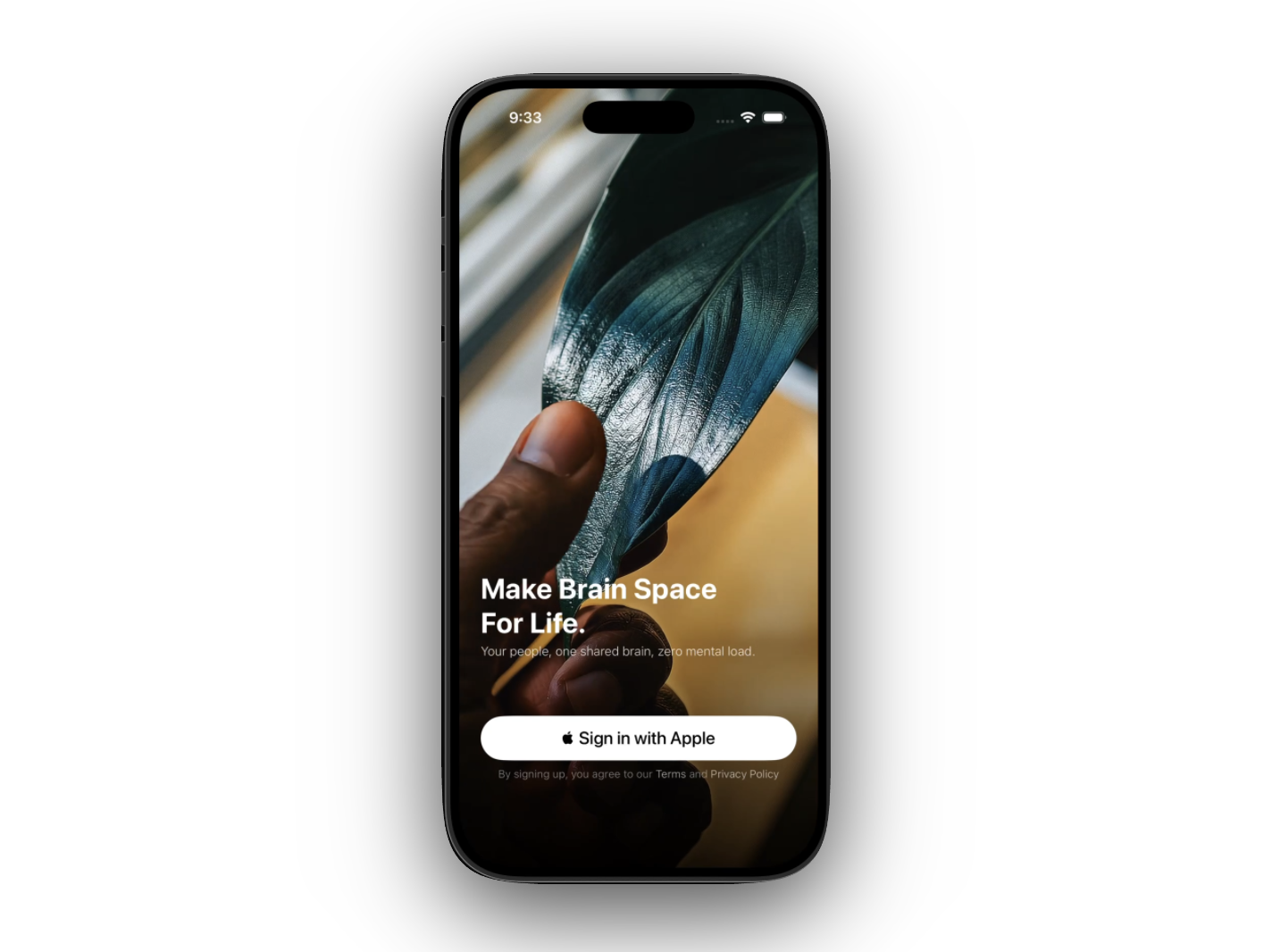
    An AI Organizer for couples.Try 3rd BrainAn AI organizer for couples: a mobile app and capture system that helped people turn thoughts, notes, and tasks into a more structured shared external brain. The work sat at the intersection of AI-assisted organization, mobile product design, mental load, and behavior change, and gave me direct founder experience building a consumer AI product from concept into shipped iOS and Android apps.What if couples had a 3rd Brain?When my wife and I were planning our wedding, we were both overwhelmed by scattered tools, fragmented thoughts, and invisible work. Sticky notes, shared docs, endless texts: none of it was enough. As two product leaders, we came up with an idea for a product, a third brain to help our two tired brains.But was it an us problem? Turns out, no. We started seeing patterns among our friends, dug deeper online, including reports from the UN, and found that mental load in relationships, especially among women, is a global, trillion-dollar problem. At the time, generative AI APIs were becoming ubiquitous, easy to call, and cheap. So we asked: What if AI could act as a third brain?A shared cognitive layer to reduce invisible labor and improve communication between partners.I got to work and built the MVP in three weeks around one hypothesis: use AI to reduce the load of data entry. By having users simply speak to the app, the AI should be able to identify tasks from the brain dump and assign them to the appropriate partner based on some user data we pass along. That is how we came up with the Brain Dump feature.We tested this prototype with 20 users, observing real-world behaviors in context. Seeing users' eyes widen when the app turned their messy brain dumps into structured tasks and notes shared with their partner in seconds was the green light we needed to build 3rd Brain.3rd Brain brain dump flow3rd Brain appreciation flowTalking to users, we noticed a constant theme: work is going unnoticed and unappreciated by both partners. So we made invisible work visible. We redesigned the app's home page to show tasks completed and notes added by the user's partner, and added the ability to send appreciation reactions. This was not about gamifying relationships. It was about validating effort and creating shared awareness.The next few months were a blur. During that time I:Built a waitlist through direct outreach and community events.Launched a 100-user closed beta, then opened up to the App Store.Hired and managed a developer and onboarded a contract GTM expert.Grew to 500 registered users over six months through organic acquisition.“This app is essential to my life now!” Diana, 43. New York.3rd Brain user keepsakeShipped fast, iterated intelligently.Being the chief designer and user researcher, I stayed in constant contact with our users and even started offering free video calls to onboard couples onto the app. Along the way, I was able to:Double partner adoption through a redesigned onboarding flow that made partner invites feel essential, not optional.Reduce day-one churn by creating an onboarding email journey that guided users with behavioral nudges and practical examples.Identify key feature gaps, like integrated calendars, as high-priority.This was not just a productivity tool. It was an AI-native design exercise in emotional UX: about how people think, forget, remember, and relate.It required me to:Design interfaces that feel more like co-thinking than task apps.Build logic and UX atop generative AI.Think deeply about fairness, equity, and explainability inside the interface.
  • Bilt Dining ProgramA restaurant rewards program that brought everyday dining into Bilt's loyalty ecosystem.At Bilt, I helped launch Bilt Dining across major metros by shaping the product experience, restaurant discovery surface, and rewards logic. The program connected neighborhood dining to the broader loyalty system and reached about 10% adoption in early rollout.10% user base adoption within the first 24 hours. And zero bugs reported.Press coverageArticle
  • Bilt WalletA card-linking product that let non-Bilt cardholders earn rewards across everyday spend.I helped introduce third-party card linking in Bilt Wallet by integrating transaction streaming APIs and designing the account-linking and rewards experience. The work expanded Bilt beyond the Bilt Mastercard and helped users connect multiple cards for rent-adjacent and neighborhood rewards.Press coverage
  • Bilt x Lyft Rewards IntegrationsA partner rewards integration connecting Bilt members to Lyft account linking and mobility rewards.I helped launch Bilt's Lyft partnership by defining API contracts, shaping in-app onboarding, and coordinating the consumer rewards experience. The integration drove 89K account linkages in the first 24 hours and connected rent, travel, and daily mobility into one loyalty loop.89,000 accounts linked in 24 hours. “This was the most thoroughly tested product launch in the history of the company.” - Bilt Head of Product during company-wide all hands meeting.Press coverageLyft Coverage
  • Bilt x point.me Flight Search PortalA flight rewards search portal that helped members compare points, miles, and cash.I led the integration of point.me's flight rewards engine into Bilt's platform, redesigning the UX so members could make clearer miles-versus-cash booking decisions. The product became a high-intent travel surface with about 50K monthly searches.50,000 monthly searches.Press coverageArticle
  • Amazon Low-Price Bundling ProgramA grocery bundling program that helped customers find better value while improving shipping economics.At Amazon, I led product work for a low-price grocery bundling program across 12 markets. The program packaged small low-priced items into better-value baskets, helping customers discover savings while improving shipping efficiency and generating $55M in incremental sales and $120M in annual shipping savings.9 products launched. 12 global markets. $120M in savings. $55M in sales.
  • Amazon Bundle Tracker and Promo SurfacesShopping UX and promotion surfaces that made grocery bundle progress easier to discover.I helped ship customer-facing bundle tracker and promotional surfaces across grocery shopping flows. The work included nine UX features and a U.S. promo page with roughly 100K daily visits, making an operational pricing strategy legible as a simple shopping experience.100,000 DAU. 5 global markets.
  • Reimagining Grocery Shopping on Amazon.comA cross-org innovation workshop to reimagine Amazon's fragmented grocery shopping experience.I led a week-long cross-org innovation workshop to reimagine the fragmented user experience of grocery shopping on Amazon.com.3 orgs. 25 participants from engineering, leadership, finance, and legal. 1 week. 20 user interviews. 5 product proposals presented to senior leadership.Amazon’s grocery ecosystem was deeply fragmented. Shoppers encountered disjointed experiences between Amazon Fresh, Amazon.com, and Whole Foods, each with its own workflows, interfaces, and fulfillment quirks. Despite having the infrastructure to serve millions of grocery customers, the experience failed to feel unified, intentional, or even intuitive.Leadership challenged our team to “Think Big” and reimagine the grocery experience at Amazon from the ground up.But the real challenge wasn’t just the problem. It was the scale and silos. Designers, PMs, engineers, and scientists all had different tools, processes, and communication styles. Innovation couldn’t happen in documents alone. It needed to be designed as an experience.As the Product Manager and Design Manager leading this initiative, I made a proposal: a three-day innovation offsite that blended Amazon’s “Working Backwards” with Design Thinking.I created a hybrid experience for 35 cross-functional stakeholders across design, engineering, science, and product. Some participants were in the room in New York, some in Seattle, and we even had a participant calling in from Pakistan.I built a bespoke process blending my background teaching Design Thinking classes at the University of Washington with Amazon’s PRFAQ framework. I crafted virtual whiteboards that guided participants to work in groups through multi-phased challenges:1. Pick from a list of problem statements I generated ahead of the workshop, informed by 20 user interviews with grocery shoppers that I conducted in partnership with the Amazon UX research team.2. Generate 100 ideas in 10 minutes.3. Pick a solution to assess problem-solution fit.4. Design how the user would use the proposed solution by telling a story.5. Communicate the idea using Amazon-native press release docs, PRFAQs.The collaborative and fun nature of the workshop created an inclusive space for technical team members to become storytellers, teaching engineers and scientists how to frame product ideas in user-first language.I participated in the workshop myself, contributing my own ideas while facilitating, guiding, clarifying, and giving feedback to participants, both in person and online.By the end of the third day, the team had eight PRFAQs written in three days, representing bold product proposals across personalization, grocery discovery, bundling, and fulfillment.Workshop outcomes fed directly into Amazon’s annual planning cycle, giving leadership tangible proposals ready for roadmap integration.The team also left with a repeatable innovation process, a template for future 0-to-1 product strategy efforts inside the org.This high-stakes project required me to facilitate vision without ego, translate user pain into product opportunities at scale, blend structured creativity with organizational literacy, and teach technical teams how to pitch like product thinkers.It’s a reflection of how I lead: designing not just the product, but the process that makes great products possible. Because Everything is designed.
  • Itau Mobile Loan AppA mobile loan-processing prototype for a major banking client through AWS.Through AWS product innovation work, I helped Itau explore and prototype a mobile loan-processing application. The engagement translated business goals, cloud capabilities, and customer needs into an experience direction the bank could use to modernize loan workflows, expanding the engagement from four pods to 12 and leaving the client with a reusable product-innovation methodology.
  • FDA Approval Research PlatformA healthcare research platform concept for navigating FDA approval evidence.On an AWS healthcare engagement, I helped rescue and reshape a struggling FDA approval research platform by rebuilding stakeholder trust, introducing persona-driven design, and creating daily alignment rituals. The team delivered a validated redesign in six weeks and preserved a critical enterprise relationship.
  • EV Charging Platform PrototypeA fleet-charging product concept for electric trucks and industrial operations.Through AWS, I helped prototype a platform for electric truck fleet charging. The work connected operational constraints, driver and fleet-manager needs, energy optimization, and cloud architecture into a product story for managing charging infrastructure at scale, including a 60-second pitch video produced in 48 hours.
  • Apple Vision Pro Multimodal Input InteractionEarly multimodal interaction research for Apple Vision Pro using voice, gaze, and mid-air gestures.At Apple, I worked on early multimodal interaction research and prototyping for what became Apple Vision Pro. I led product design for a text-input interaction system that combined voice, gaze, and mid-air gestures, then ran co-design studies under secrecy constraints that challenged core assumptions and influenced the feature direction presented to senior AI/ML leadership.
  • Distributed Interaction DesignA thesis framework for running design research across distance, devices, and contexts.Distributed Interaction Design was my Ph.D. thesis direction at the University of Washington. It used the web, machine learning, and human computation to let researchers and designers run elicitation, co-design, and sensemaking work with people across the world, a framing that became especially relevant during social distancing.PublicationsInteraction magazine ArticleFull Dissertation
  • I am Iron ManA research study on how sci-fi primes the gestures people invent for VR.This project investigated how science-fiction imagery shapes the gestures people imagine for virtual reality. By using priming from movies like Iron Man, the study explored how cultural references can influence gesture elicitation and interaction design for emerging modalities.PublicationsCHI 2021 Article
  • Anachronism by DesignA study of how young adults understand inherited computer iconography.Anachronism by Design examined how young adults interpret desktop icons whose meanings come from older physical metaphors. The work asks what happens when interface symbols outlive the objects that originally made them obvious, and how designers should rethink icon systems for new generations.Journal article
  • CrowdlicitA distributed co-design platform that scaled end-user elicitation studies online.Crowdlicit was a two-sided research platform for conducting distributed end-user elicitation and design studies. It let researchers create studies, recruit participants remotely, collect participant-generated interaction ideas, and organize responses at a scale that would be hard to reach in a lab session.CHI paper
  • CrowdsensusA machine-learning-assisted workflow for making sense of large qualitative datasets.Crowdsensus combined human similarity judgments with unsupervised machine learning to analyze large sets of qualitative design responses. The system helped researchers find agreement patterns in end-user elicitation studies while keeping the human nuance of the data visible.UIST paper
  • DytectiveAn award-winning game that used AI and player behavior to detect dyslexia.At Carnegie Mellon, I was one of four scientists who co-invented Dytective, a game that uses AI to detect dyslexia from how children play. I helped design and develop the game experience, translating linguistic error patterns into playful levels whose performance data could predict dyslexia risk with over 90% accuracy. The project won ASSETS Best Demo, placed seventh in the International AI & Robotics for Good competition, and went on to help more than 500,000 children through Change Dyslexia.CMU coverageASSETS demo
  • Dyslexia Search PrototypeA Microsoft Research prototype for studying search accessibility and dyslexia.At Microsoft Research, I worked on accessibility and dyslexia-focused search research with the Ability group. Building on interviews with people with dyslexia, I ran large surveys, developed a web-based prototype for rating page readability, and helped publish work that informed how search systems could better serve people looking for readable, useful results.Microsoft blogCHI paper
  • ML-Based Self-Adapting Accessible InterfacesMachine-learning interfaces that adapt to changing pointing performance and ability.At UMBC, I worked as an accessibility researcher while completing my master's in Human-Centered Computing and bachelor's in Information Systems. This project explored adaptive interfaces that respond to user ability, motor performance, and changing needs rather than forcing every person into a fixed interface.W4A paper
  • Mobile Gesture Authentication SystemA gesture-based authentication system for mobile devices and accessible input.This UMBC research explored mobile gesture authentication as an alternative to conventional passwords. The project investigated how gestures, touch, and mobile sensors could support secure interaction while opening questions about accessibility, memorability, and input performance.
  • Sequential Gestural Passcodes Using Google GlassA wearable authentication project using gesture sequences on Google Glass.Sequential Gestural Passcodes extended my gesture-authentication work into wearable computing. Using Google Glass, the project explored how a sequence of gestures could become a passcode system for emerging devices where keyboards and traditional authentication flows do not fit.
  • InsterpreterMy first software project, inspired by working as an interpreter at Johns Hopkins.While I was in college, I worked as an interpreter at Johns Hopkins. That job inspired me to build Insterpreter, my first piece of software: an early attempt to turn a lived communication problem into a tool that could help people coordinate interpretation work more effectively.

Areas of experience

Applied AI
Designing and building AI/ML-powered products since 2014.
Product leadership
Owning 0-to-1 strategy, roadmaps, experiments, launches, partnerships, analytics, and teams.
Product development
Building prototypes and production systems across software: web and native apps, APIs, AI integration; and physical objects: woodworking, 3D printing, laser cutting.
Human understanding
Ph.D.-trained researcher with experience in mixed-method experimental design and analysis, co-design protocols, interviews, surveys, and prototype testing to understand human behavior.
Experience Design
End-to-end experience mapping, design, and execution of technologies centered around human needs, abilities, values, and preferences: from problem definition and journey mapping to pixel-perfect interfaces and brand identities.
Teaching and writing
Years of experience teaching at the graduate and undergraduate level, speaking at scientific conferences, and running workshops for enterprise clients. My lectures and writing bridge academia and applied industry work.

Writing

Publications

Journal Articles

Interactions 2021Ali, A. X., Morris, M. R., Wobbrock, J. O. Distributed interaction design: designing human-centered interactions in a time of social distancing. interactions 28, 2, 82-87. IJHCSAli, A. X., McAweeny, E. R., Wobbrock, J. O. Anachronism by Design: Understanding Young Adults' Perceptions of Computer Iconography.

Conference Papers

CHI 2019Ali, A. X., Morris, M. R., Wobbrock, J. O. Crowdlicit: A System for Conducting Distributed End-User Elicitation and Design Studies. UIST 2018Ali, A. X., Morris, M. R., Wobbrock, J. O. Crowdsourcing Similarity Judgments for Agreement Analysis in End-User Elicitation Studies. CHI 2018Morris, M. R., Fourney, A., Ali, A. X., Vonessen, L. Understanding the Needs of Searchers with Dyslexia. W4A 2018Martin-Hammond, A., Hamidi, F., Bhalerao, T., Ortega, C., Ali, A. X., et al. Designing an Adaptive Web Navigation Interface for Users with Variable Pointing Performance. CHI LBW 2018Ali, A. X., Morris, M. R., Wobbrock, J. O. Distributed Interaction Design: Designing Human-Centered Interactions in a Time of Social Distancing. SIGIR 2017Fourney, A., Morris, M. R., Ali, A. X., Vonessen, L. HCI Research for Accessible Search: Enhancing Information Retrieval Systems to Better Serve Users with Dyslexia. CHI 2015Buehler, E., Branham, S., Ali, A. X., Chang, J., Hofmann, M., Hurst, A., Kane, S. Sharing is Caring: Assistive Technology Designs on Thingiverse. Best Paper Award - Top 1%. ASSETS 2015Rello, L., Ali, A. X., Bigham, J. P. Dytective: Toward a Game to Detect Dyslexia. Best Demo Award. W4A 2015Martin-Hammond, A., Ali, A. X., Hornback, C., Hurst, A. Understanding Design Considerations for Adaptive User Interfaces for Accessible Pointing with Older and Younger Adults. Best Paper Nomination. ASSETS SRC 2015Ali, A. X. Interpreting Gestures with a Mobile Device to Support Communication. CHI SRC 2014Ali, A. X. Investigating Input Performance on Mobile Devices for Users with Hand Tremors.

Workshop Papers & Doctoral Consortium

HCOMP 2017Ali, A. X., Morris, M. R., Wobbrock, J. O. Crowdlicit: A System for Distributed End-User Elicitation and Identification Studies. CHI 2017 WorkshopAli, A. X., Morris, M. R., Wobbrock, J. O. Distributed Interaction Design. HCOMP 2017 DCAli, A. X. System for Distributed End-User Elicitation and Identification Studies. CHI 2016 WorkshopAli, A. X., Hurst, A., Martin-Hammond, A. Designing Interactive Systems for Users with Variable Pointing Performance. ASSETS 2016 PosterAli, A. X., Siddig, S., Hurst, A. Building Adaptive User Interfaces for Improving Pointing Performance for Users with Parkinson's Disease. ASSETS 2014 PosterAli, A. X., Hurst, A., Martin, A. Performance Evaluation of Mobile Touchscreen Gestures.

Press

Media KitGet SquareGet WideTitleCreative Scientist & Founder, Seena LabsBioDr. Ax Ali has been designing AI-powered experiences since 2014. As founder of Seena Labs and an HCI researcher, his 20+ peer-reviewed papers range from self-adapting interfaces for people with Parkinson's to AI that detects dyslexia in children. After leading product at Apple, Microsoft, and Amazon, he now runs workshops for Adobe on using AI-powered tools to enhance creative workflows, and has lectured on design at Carnegie Mellon, Columbia, and Harvard.Contact

Press & Media Coverage

Modern Husbands Podcast
“Balancing Act: How Dual Career Couples Can Manage Together” (July 2025)
Foreign Founders Podcast
Featured interview (February 2025)
Columbia University
Guest Lecture: “Building Human-Centered Products in the Age of AI” (September 2025)
UW Startup Spotlight
Startup spotlight feature (2024)
Microsoft Research Blog
Carnegie Mellon HCI
El País
“Find out if you are at risk of dyslexia in 15 minutes” (2015)
Spanish National TV
Change Dyslexia and Dytective coverage (2015)

Workshops

The Good Idea Sprint by Seena Labs
Enhancing Creative Workflows with Generative AI
Expert Adobe Express Workshop
Expert Adobe Firefly (Generative AI) Workshop

Product Launch Coverage

Invited Talks & Guest Lectures

Columbia University
Guest Lecture: “Building Human-Centered Products in the Age of AI: From Theory to Application” (September 25, 2025). Invited by Professor Alexis Wichowski.
Harvard University
Distributed Interaction Design (2021). Invited by Professor Elena Glassman.
University of Michigan
Distributed Interaction Design (2021). Invited by Professor Robin Brewer.
Towson University
Distributed Interaction Design (2021)
Carnegie Mellon University / Apple
Distributed Interaction Design (2019). Invited by Jeffrey Bigham.
Microsoft
Research projects presentation to Chief Accessibility Officer Jenny Lay-Flurrie (2017)
DUB Group
The Crowd: Participant and Researcher (2018)
AAAI HCOMP Doctoral Consortium
Crowdlicit Platform (2017)

Contact